
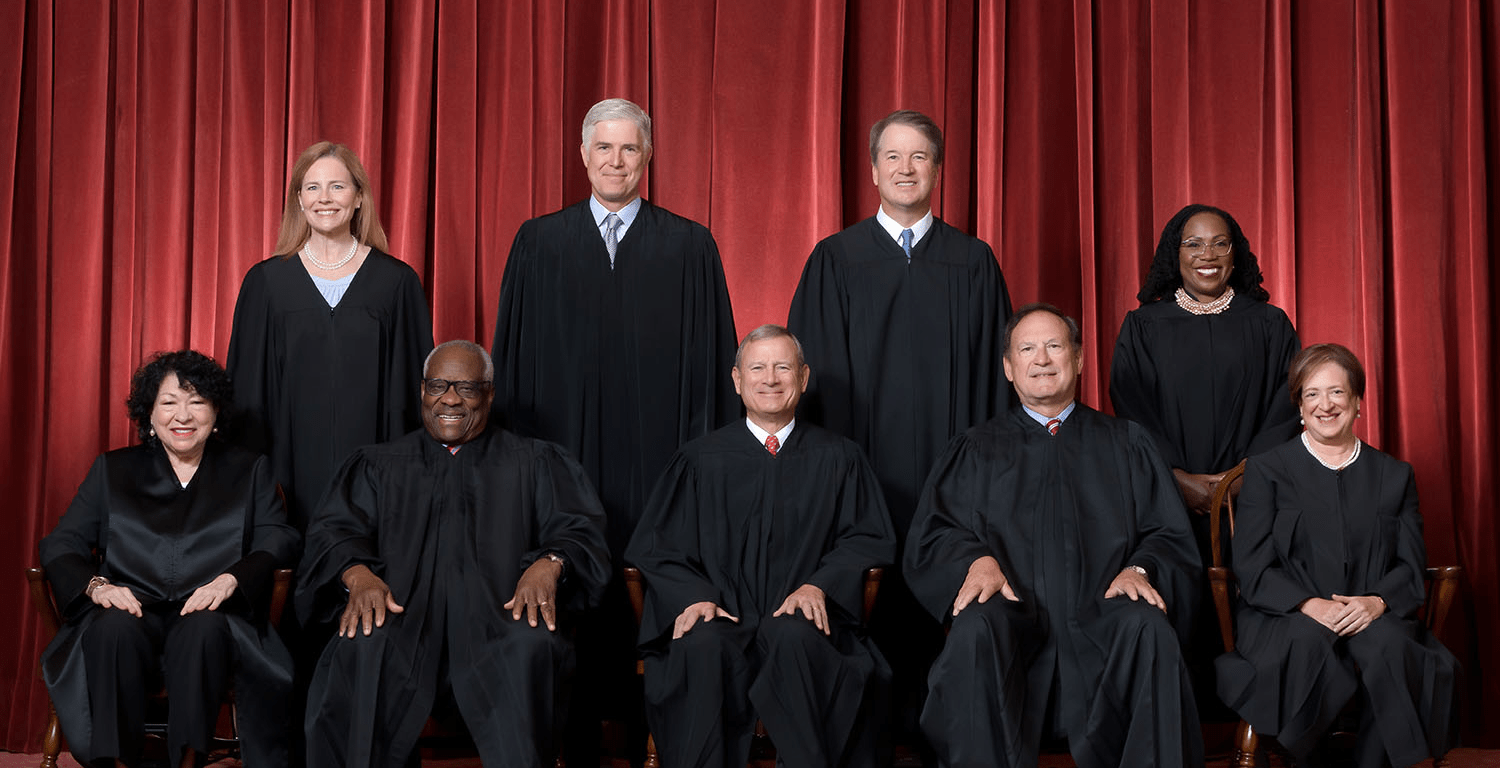
The High Court Begins a New Season
Shadowed by the public outrage of the reversal of Roe v. Wade, the limitation of accountability for the president, and upholding laws including bans on transgender surgeries, the Supreme Court is starting a new term filled with many difficult cases that will impact the everyday lives of Americans.
This year’s term began on October 6th, 2025. Some of the important cases they will hear are Little v. Hecox, West Virginia v. B.P.J., Trump v. Slaughter, Case v. Montana, Hamm v. Smith, among others.
Hamm v. Smith is a capital murder case where a man named Joseph Smith was convicted and sentenced to death in Alabama. He sought to overturn his sentence by arguing that he is intellectually disabled and cannot be executed because of the 8th and 14th Amendments. Smith’s IQ tests gave varying results. While his tests met the intellectual disability line, an expert testified that four out of the five tests he took only counted as “mild” intellectual disability, while another expert argued that he was just above the intellectual disability line. The lower court ended up deciding that he was intellectually disabled. While the federal courts agreed, the Supreme Court has accepted the request to decide this case, setting precedent for what counts as being intellectually disabled.
A big issue for this year’s term will definitely be presidential powers. More specifically, the power to fire federal employees without good reason. In Trump v. Slaughter, President Donald Trump fired the commissioner of the Federal Trade Commission (FTC), which oversees protecting people from fraud, stopping businesses from using shady business practices, and much more. The commissioner, Rebecca Slaughter, was fired by President Trump in March of 2025. Feeling that she was wrongly removed, she took the president to federal court. Back in September, the Supreme Court made a preliminary ruling (fancy language for making a decision before the final decision) stating that while the case was still ongoing, the FTC Commissioner could not serve in her job. Thus, she has been temporarily fired until a decision is reached in federal court, and eventually by the Supreme Court as well.
In September of 2021, Trevor Case’s ex-girlfriend, J.H., notified the police that Case was threatening to commit suicide when they had talked in a phone conversation. She reported that he was displaying “erratic behavior” and became alarmed when she received a note from him before he committed suicide. Case, in turn, threatened that he would harm any officer who tried to come into his home. Hearing a gunshot followed by silence on the phone, J.H. called the police and went to his residence. When law enforcement came, they tried coming in peacefully, but receiving no response, officers went into his house without a warrant. Knowing the threat he made on the phone with his girlfriend, the officers had guns drawn and spotted him behind a curtain and shot him when the sergeant noticed a “dark object” at his waist. The Supreme Court in this case must determine whether it was legal for police to enter a home without a search warrant in the case of an ongoing emergency.
This term, it is clear that the Supreme Court will have to evaluate many unique cases with outcomes that are not so black and white. The Supreme Court’s job is to constantly interpret and re-interpret settled or unsettled law, and the cases for this term have the capability to change the lives of many.

Photograph: Property of the United States Supreme Court, Public Domain
 The Scroll