
How Halloween is celebrated in different cultures
Holidays are celebrated differently depending on the country, and Halloween is no exception. While you may find festivals analogous to Halloween like Mexico’s Día De Los Muertos or the Nordic’s Fastelavn, the ways in which they are celebrated differ from those in the United States, oftentimes having completely separate customs and cultural significance.
According to the Joukowsky Institute for Archeology and the Ancient World at Brown University, before Halloween became as widespread as it currently is, it was celebrated as Samhain, a Gaelic holiday meant to celebrate the transition from Autumn to Winter. Occurring from the sunset of October 31st to the sunset of November 1st, Samhain celebrated not only the end of the Gaels’ (ethnic groups native to Great Britain) harvest season, but was meant to celebrate the dead through food offerings. They also wore disguises made from animal skin and soot that were meant to avoid recognition from evil spirits.
Christian missionaries who traveled to Europe around the 6th-8th centuries attempted to change Samhain by replacing its connections to Paganism with Christianity. Over the span of a few centuries, it had developed into the holiday known as All Saints’ Day, meant to commemorate Christian saints and martyrs on November 1st. This eventually led to the creation of All Hallows’ Eve, a day meant to be celebrated on October 31st in preparation for All Saints’ Day through prayer, fasting, and early celebrations.
All Hallows’ Eve kept some of Samhain’s traditions, dressing up as saints, ghosts, animals, and other holy figures to ward off demons, while also honoring the dead by lighting bonfires and singing. People left food out for wandering spirits, children went from door to door singing songs in exchange for small goods (coins, fruits, or biscuits known as Soul Cakes), and people carved out faces into vegetables to deter spirits. All Hallows’ Eve was shortened to Halloween. These practices, which spread through European immigration to the United States, are what inspired Halloween traditions like carving Jack-o’-lanterns, trick-or-treating, and dressing up in different costumes.
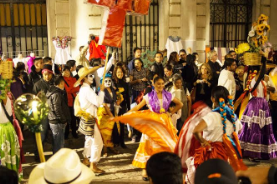
Samhain is also responsible for Día De Los Muertos (or Day of the Dead), a Mexican holiday meant to honor the souls of deceased family members by making Offrendas – altars with lit candles, photographs, and items reflecting the four elements of the Earth (food, tissues, candles, and water can represent the earth, wind, fire, and water) – using Marigolds to guide spirits with their strong scent, and eating cultural foods. The celebration contains Aztec roots from 3,000 years ago as well, as the Aztec Empire held month-long celebrations to honor the dead through their god Mictecacihuatl, or Lady of the Dead. They used iconography of skeletons to portray the belief that the dead were still close to the living. Spanish colonizers in the 16th century introduced the Aztecs to Catholic holidays like All Saints’ Day, which had been mixed into the Aztec celebration, and is why the holiday starts on November 1st.
The Filipino holiday Pangangaluluwa – “being for the soul” or “souling,” derived from the word kaluluwa, meaning spirit – is also the result of Spanish missionaries traveling to the Philippines in the 16th century. It stemmed from both All Saints’ Day and pre-colonial indigenous ancestor worship through animism-related practices. On November 1st, people celebrate by dressing in white or other simple costumes, going door-to-door to sing in exchange for prayer, money, or food.
Even if Halloween isn’t as popular in other countries as it is in the United States, its origins are shared across many different cultural festivals that, while they might have different practices, still have many notable similarities. Across different celebrations, you’ll be able to find traditions with premises similar to trick-or-treating, wearing costumes, honoring the deceased, and eating festive food, showing that many of us have more in common than we might realize, regardless of cultural differences.

